Newsletter Subscribe
Enter your email address below and subscribe to our newsletter

 ByJohn A
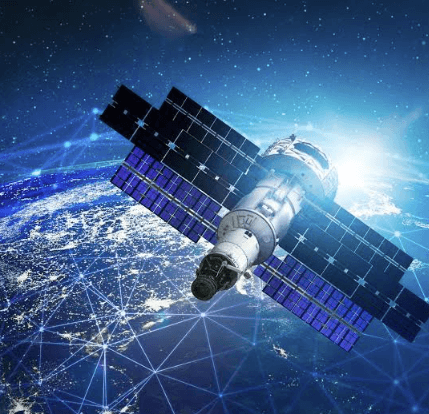
Artificial intelligence is increasingly embedded in satellite systems to enhance perception, decision-making, and control. The approach spans edge processing, autonomous navigation, and real-time imagery analysis, aiming for low-latency insights and resilient operations. Empirical validation and scalable architectures are essential to meet dynamic orbital conditions and governance needs. The balance of risk, safety, and innovation shapes standards and ethics, offering a structured path forward that warrants further examination and cross-disciplinary collaboration.
Artificial intelligence augments satellite operations by automating data interpretation, decision-making, and control tasks that were previously executed manually. The approach integrates cross-disciplinary methods, empirical validation, and systematic testing to improve reliability and efficiency.
Edge optimization informs on-board processing constraints, while model deployment enables adaptive responses to changing conditions, enhancing resilience, autonomy, and mission design flexibility for diverse orbital contexts.
Edge computing enables localized analysis, reducing latency and bandwidth strain while preserving resilience.
Autonomous routing emerges as a configurable, verifiable capability, balancing power, safety, and efficiency.
Empirical evidence supports scalable architectures, enabling adaptive mission planning amid dynamic orbital environments.
Real-Time Imagery Analysis and Anomaly Detection centers on the rapid interpretation of spacecraft-collected imagery to support immediate decision-making. The discipline integrates computer vision, statistics, and domain expertise to identify anomalies, promptly signaling operators. It addresses data latency challenges and monitors model drift, ensuring robust performance across evolving scenes, sensor conditions, and mission objectives with disciplined, empirical evaluation and cross-disciplinary collaboration.
The evaluation adopts empirical methods to map risk categories, standardization gaps, and governance models across stakeholders.
Data governance and ethical implications are central, guiding policy alignment, accountability, and transparency while balancing innovation, resilience, and freedom to explore responsible AI applications in space systems.
AI threat modeling guides structured defenses; autonomous anomaly detection identifies deviations, enabling rapid containment. The approach blends cybersecurity, aerospace, and data science, emphasizing empirical validation, cross-domain collaboration, and adaptive resilience to evolving cyber threats in satellite systems.
“Like a compass unmoored,” the assessment notes: autonomous governance raises accountability concerns, transparency bias, and mission autonomy. The interdisciplinary analysis advocates robust accountability frameworks, ethical risk assessment, and empirical measures guiding autonomous satellite decisions for a free, responsible domain.
AI optimization can reduce launch and maintenance costs by streamlining operations, improving reliability, and automating routines; empirical assessments suggest measurable cost reduction, though outcomes depend on system integration, data availability, and interdisciplinary collaboration for robust, scalable solutions.
See also: captionmap
Cross-agency coordination governs AI governance through formal bodies, shared frameworks, and continuous assessment; cross agency coordination aligns standards, autonomous decision making informs policy harmonization, and interdisciplinary, empirical methods underpin transparent, freedom-supporting governance across space agencies.
The limits of AI in extreme environments restrict processing speed, reliability, and fault tolerance; systems struggle with radiation, thermal variance, and latency. Interdisciplinary evaluation shows empirical bounds, suggesting cautious autonomy, redundancy, and human oversight for robust, freedom-oriented mission design.
Artificial intelligence augments satellite operations through edge processing, autonomous navigation, and real-time analytics, enabling resilient, low-latency decision-making. An interdisciplinary, empirical approach reveals that AI’s value lies in robust architectures, rigorous validation, and transparent governance. As missions grow in complexity, AI acts as a compass in uncertain space—guiding with adaptive, data-driven insight while balancing risk and safety. Like a lighthouse in a fog of variables, AI illuminates paths for sustainable, scalable space systems.